Hook
Role
Created both a brand strategy and system for an AI EdTech startup.
Year
2026
Agency: Team
Self-initiated speculative project.
Services
Brand Strategy, Brand Positioning, Visual Identity, Verbal Identity, Brand System
Description
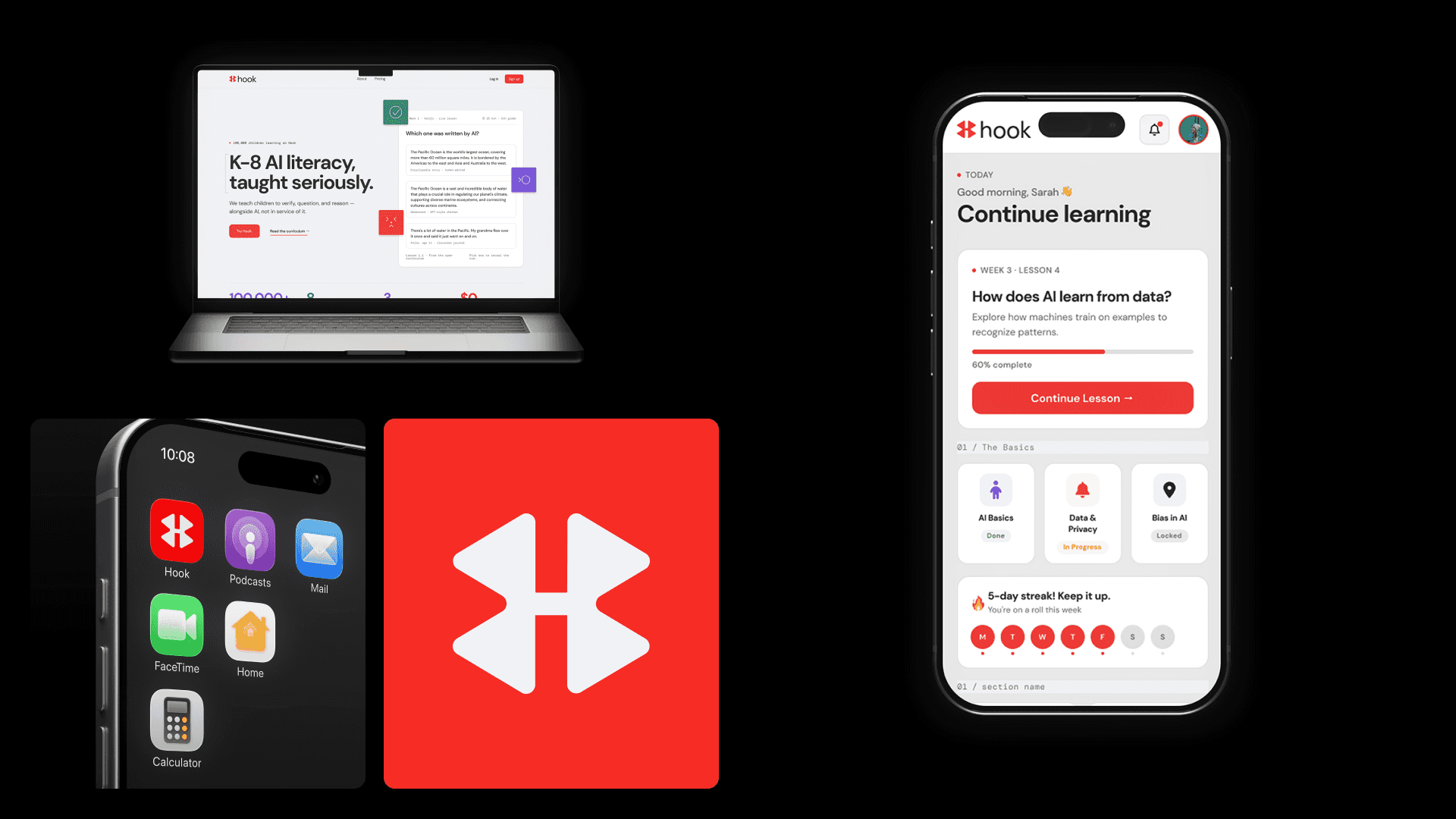
A speculative brand identity for K–8 AI literacy, built on the conviction that command of AI is now a more important inheritance than command of code.
The Problem
The K–8 tech education category was built on a single sentence: every child should learn to code. AI rewrote that sentence and most of the category hasn't noticed. Tynker is still selling the ladder to Python. codeSpark is still selling pre-reader coding. The emerging AI literacy brands teach kids to prompt better — exactly the wrong skill at exactly the wrong moment. Meanwhile, a specific parent has emerged: thoughtful, design-literate, anxious but not paralyzed, asking a different question than the one the category is still answering. The challenge: build the brand for the parent who has already understood the question has changed, and for the child she is raising into the answer.
The Approach
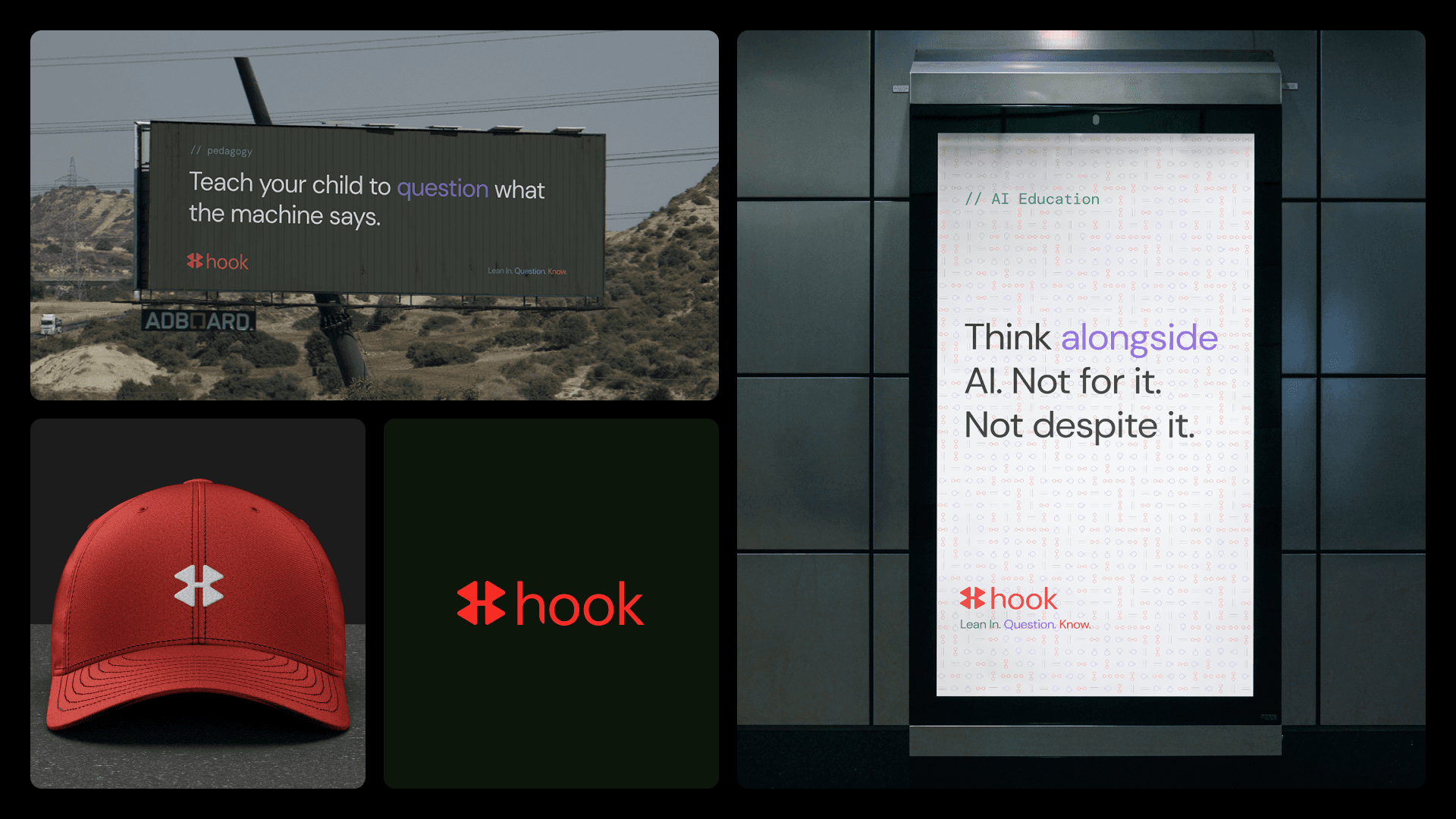
The strategic foundation came from a single insight: coding was the literacy of the recent past, and the literacy that replaces it is judgment — knowing how to check an answer, knowing how to push back, knowing what you know. Hook is the first K–8 brand built natively for that question rather than retrofitted toward it. From there: a verbal identity built on refusal — Hook does not say "fun," "engaging," "empower," "future-proof." The absence of those words is the brand. A visual system applying publishing-house restraint to a category that has only spoken in primary colors and cartoon volume — generous space, considered typography, ink and paper interrupted only rarely by a single signal red. A color hierarchy built on the hidden architecture of syntax highlighting, where three accent colors map directly to the three pedagogical houses — Verify, Question, Know — so that color is not decoration, it is curriculum. A mark and wordmark that read together as a terminal prompt: the place where input begins. A brand voice that addresses the parent and the child as serious people, in the same register, scaled appropriately.
What Changed
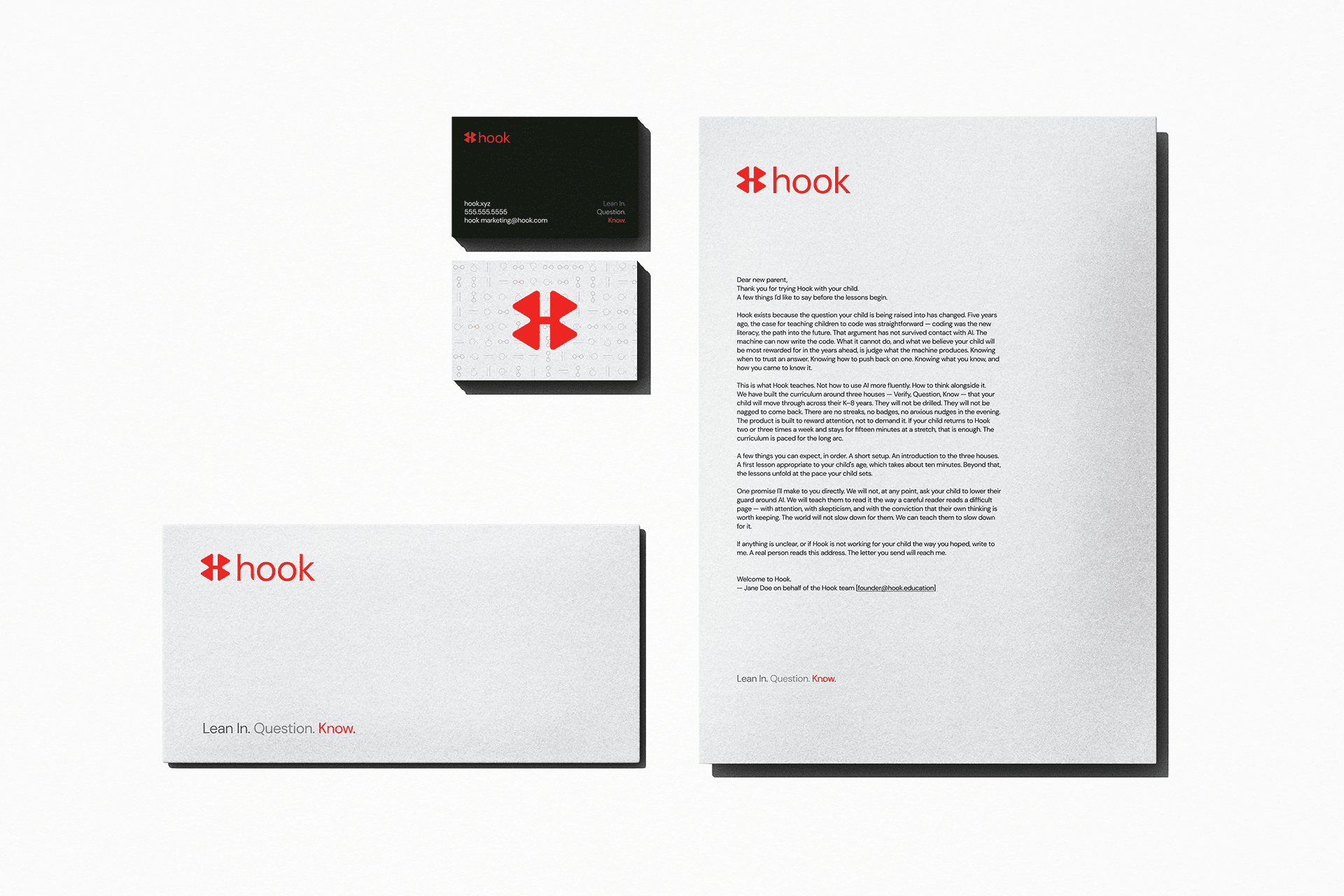
The system was built to do something the category had not attempted: speak to the parent who reads about AI literacy with the intellectual seriousness she expects from journalism, and to her child with the same respect, scaled appropriately. It resolves the central category tension — parental anxiety about AI dependence — not by reassurance but by offering a credible alternative. Hook does not teach a child to use AI more fluently. It builds the judgment that keeps the child in command of it. The visual system scales from a homepage hero to a lesson surface to a printed brief without breaking. The verbal identity holds in a parent email, a button label, and a brand manifesto. The brand looks the way it does because, given the strategy, it could not credibly look any other way.